
Never Give Up
Diary of a London Writer

Hello Everybody,
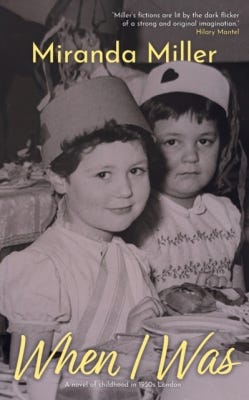
I was pleased to see some reviews of my new novel, When I Was (Barbican Press 2025):
The novel is an easy read … the touch is light and often humorous … the characterisation is interesting. There is much to recommend this novel, particularly to readers interested in the social changes happening in post-war British society.- Adele Wills for the Historical Novel Society
A lyrically written novel about life in 1950s London, based on the author’s own childhood. The beautifully written book offers a crisp snapshot of life in Great Britain after the war. This is a highly recommended novel presenting a slice of life of one family in a bygone era.- Maureen Stapleton for LoveReading
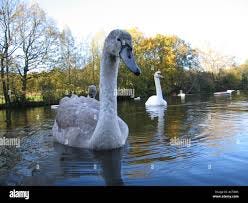
This long hot summer has been wonderful for swimming. At our last early morning visit to the Womens’ Pond near Highgate my daughter and I saw two swans, waiting near the ladders where swimmers enter the water. I was nervous at first, having heard stories of aggressive behaviour by these beautiful creatures, but they didn’t bother us at all, they were only waiting for their admirers to throw them a second breakfast. The more I swim the more I’m convinced of its benefits: it relaxes and energises me, often putting me in a meditative mood that opens my mind to make decisions about my life, and writing. As I climb out of the water I feel a wave of euphoria. I’m not one of the heroic swimmers who keep going in the pond throughout the winter; after a last plunge last Sunday I’ll retreat to the comfort of heated pools, saunas and steam rooms until next summer.
In November my daughter, Dr Rebecca Rohrer, is going to do a charity walk in the Sahara to raise funds for a charity that helps women who are diagnosed with “early” breast cancer. Like me, she went through this ordeal, and we are both very conscious of our good fortune in still being alive to talk and write about it.
https://www.justgiving.com/page/rebecca-rohrer-1
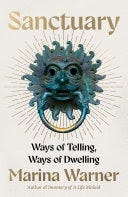
I’m hugely enjoying this fascinating book by Marina Warner, who I met briefly at an Authors’ Club lunch last month. Her lifelong passion for fairy tales, mythology and allegory as well as her belief in the power of the imagination have been inspiring.
Marina’s latest book, Sanctuary, Ways of Telling, Ways of Dwelling. investigates the ancient origins of this important idea. Later, in medieval Europe, the principle that a Church was a safe place, and that strangers must be given hospitality, was widely accepted. Marina spoke eloquently about the historical background to the idea of sanctuary and what it has meant for thousands of years. Interesting anecdotes about fairy tales and legends showed the depth of her knowledge of folklore and her awareness of the connections between different world cultures.
Particularly impressive was her compassion for refugees who need sanctuary now: at a time of increasing nationalism and xenophobia, when migrants are often vilified and rejected, Marina is directing a project called Stories in Transit which brings young refugees together with artists, writers and musicians in the UK and in Sicily. Since 2016, in a series of workshops, they have been encouraged to invent or reimagine stories and to perform them, often using puppets or masks or music.
Last week I was delighted to be invited to the Royal Academy bookshop to sign copies of my eighth novel, Angelica Paintress of Minds (Barbican Press 2020). Angelica Kauffman was one of the original founders of the Royal Academy in 1768, when it was in Somerset House. I really enjoyed researching her spectacular career as an artist in London and Italy. Like so many women artists, she’s only just beginning to be fully recognised.
www.mirandamiller.info